
Farming at Churchtown Dairy
Farming at Churchtown
At the heart of our work at Churchtown Dairy is a passion for health – for the animals, the soil, the plants, and for people. The farm is a balanced system based on biodiversity principles where the use of poisonous fossil-fuel based fertilizers, herbicides and pesticides are eliminated. Instead, essential organic nutrients are re-used on the farm. We are dedicated to the highest level of care for our animals who give much in return: increased soil fertility to the pastures and their nutritious milk, cheese, and meat.
Located on 250 acres just outside Hudson NY, Churchtown manages a 30-cow dairy herd, with an equal number of young stock and a group of beef cattle.The cows are fed a grass-based diet, in alignment with their natural dietary needs, with only minimal supplementation of grain.
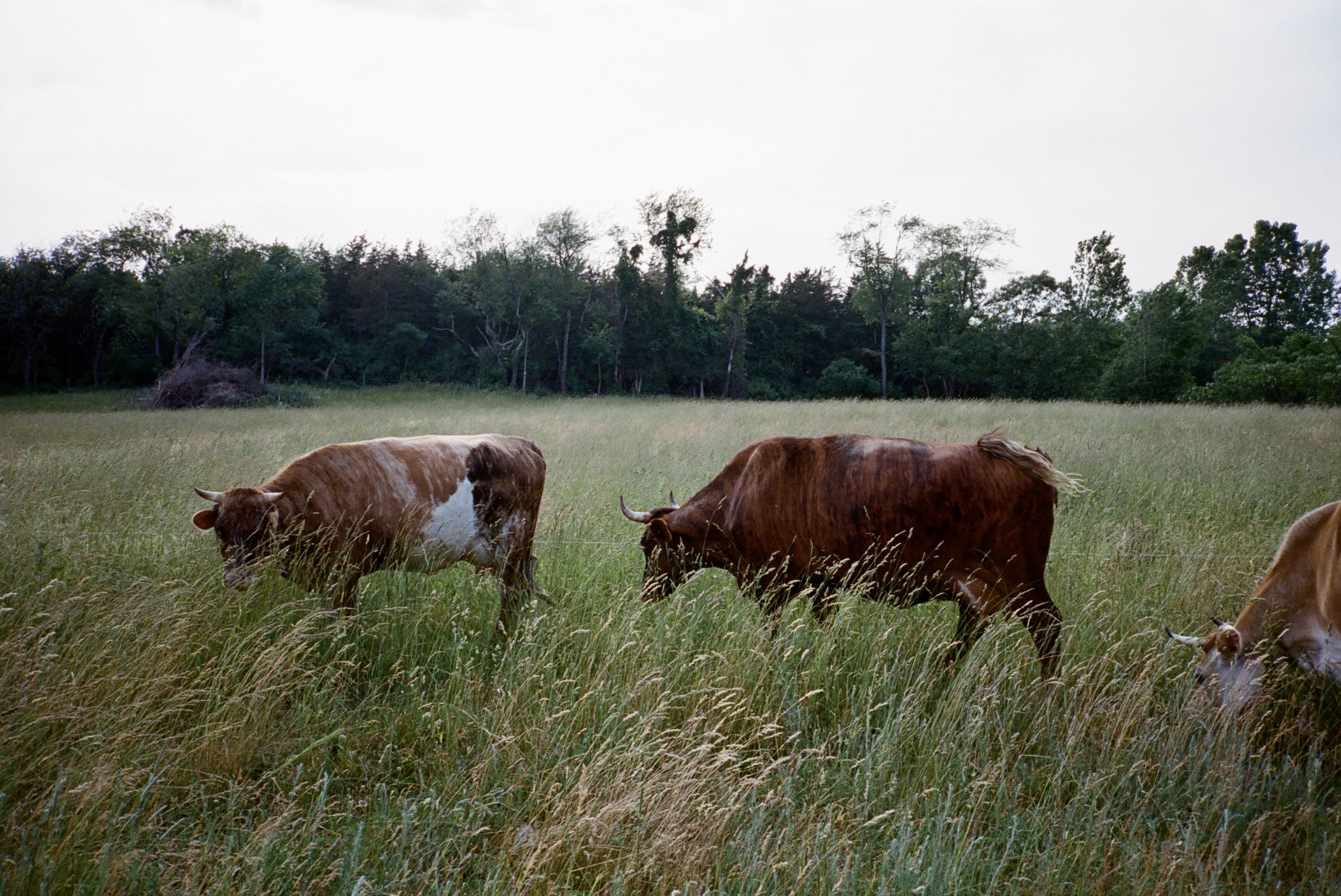
One thing you will notice when visiting our herd is that many of our cows have horns, dairy cows included. Horns are part of their natural development but are either removed or bred out in conventional operations as the potential danger horns pose require greater care in handling. We keep horned animals as an important part of our biodynamic practice and to accommodate the cows, not the other way around. It is another way we seek to build a healthy, trusting and mutually beneficial relationship with the animals in our care.

Photo by A Country Road Photo.

All cows develop horns naturally.
We emphasize grazing practices that improve soil health, which in turn improves our forage and animal health. Composting is key to achieving these desired outcomes, a time-consuming process but well worth the time and effort because there is no better way to supplant soil and plant health. Composting effectively reduces farm ‘waste’, principally manure, and produces finished compost - a soil amendment rich in organic matter and nutrients essential for vigorous plant growth. Additionally, applying our own organic fertilizer eliminates fossil-fuel based inputs widely used on factory farms.
We partner with Hudson Carbon to monitor how our grazing and composting practices improve both our own land and the broader ecology that we impact.
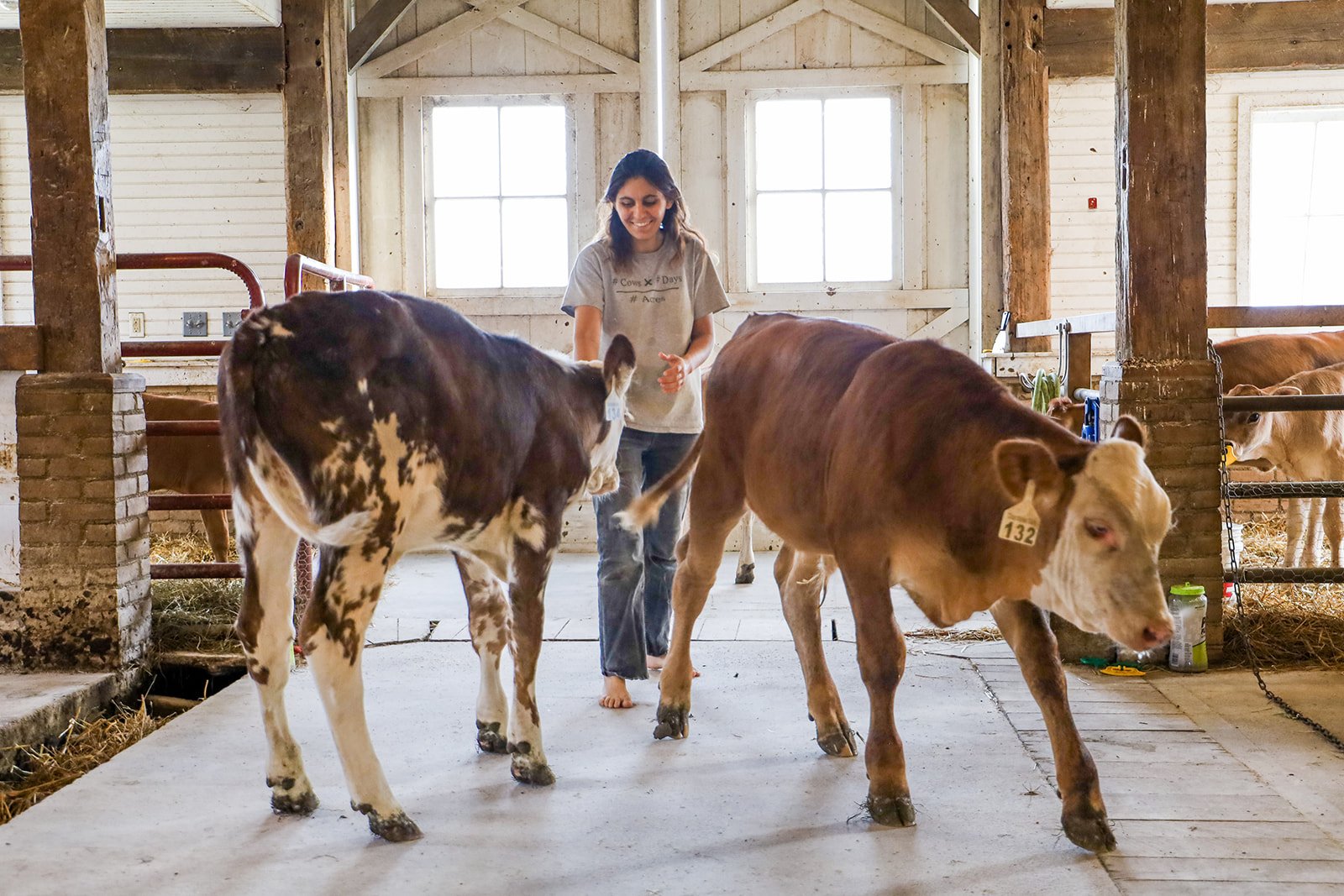
Churchtown offers a new way to experience dairy animals that represents something old and very much worth reviving. Visitors are welcome to see how naturally humans and cows can coexist and thrive in mutual dependence. All are invited to drop by and observe the dairy cows during their afternoon milking at 3:30pm and learn more about this work from our farmers.
Our Herd
-

Brown Swiss
Brown Swiss cattle are thought to be one of the oldest dairy breeds in the world. These cattle originated in the Swiss Alps, a mountain range that covers more than half of Switzerland’s surface area. The Brown Swiss or American Brown Swiss is an American breed of dairy cattle. It derives from the traditional triple-purpose Braunvieh of the Alpine region of Europe. The breed was selectively bred for dairy qualities as well as for its draft and beef.
Brown Swiss are one of the largest bodied dairy breeds, with a mature cow weighing 1,300-1,400 pounds and a mature bull weighing as much as 2,000 pounds. The fat to protein ratio in Brown Swiss milk is ideal for cheese, thus making them one of the most popular breeds around the world for cheese making.
-

Guernsey
Guernseys are a neighbor to the Jerseys, having been developed on the Island of Guernsey in the Channel Islands. Guernseys are thought to have originated from a mix of two French breeds: Brindle cattle, also known as Alderneys from Normandy, and the Froment du Leon from Brittany.
Guernsey cattle are fawn (a light reddish-brown) and white with hide markings clearly defined. The light coat color allows them to tolerate heat better than some of the darker breeds of dairy cattle. They are a medium-bodied cow, weighing about 1,200-1,300 pounds at maturity. Guernsey cattle are adaptable to different climates.
This breed is famous for the “golden” color of their milk, which happens because they have a high concentration of solids – 4.7 percent ± 0.4 butterfat, 3.4 percent ± 0.2 protein according to Dairy Records Management Service.The high concentration of components also makes Guernsey milk more desirable for cheese processing.
-

Jersey
Located off the coast of France and in the English Channel lie the Channel Islands, home to the Isle of Jersey, where this breed of dairy cattle originated. First called “Alderney cattle,” Jerseys are one of the oldest breeds of cattle having been brought to England in the 1740s and the United States in the 1850s.
Jerseys have a black muzzle and either a white or black tongue and switch, the hair at the very end of the tail. They may have some white markings on their hide mixed in with the fawn coloring. Jersey cattle are a smaller bodied breed, reaching only about 1,000 pounds as a mature adult. Jersey cattle are very efficient grazing animals and can thrive in many different climates and geography types around the globe. Over time, this breed has been selected to produce very high components, which are butterfat and protein, in their milk.